
A 12th-century castle, Colli del Trasimeno wines and an experience that brings together 800 years of history and a glass of Sangiovese
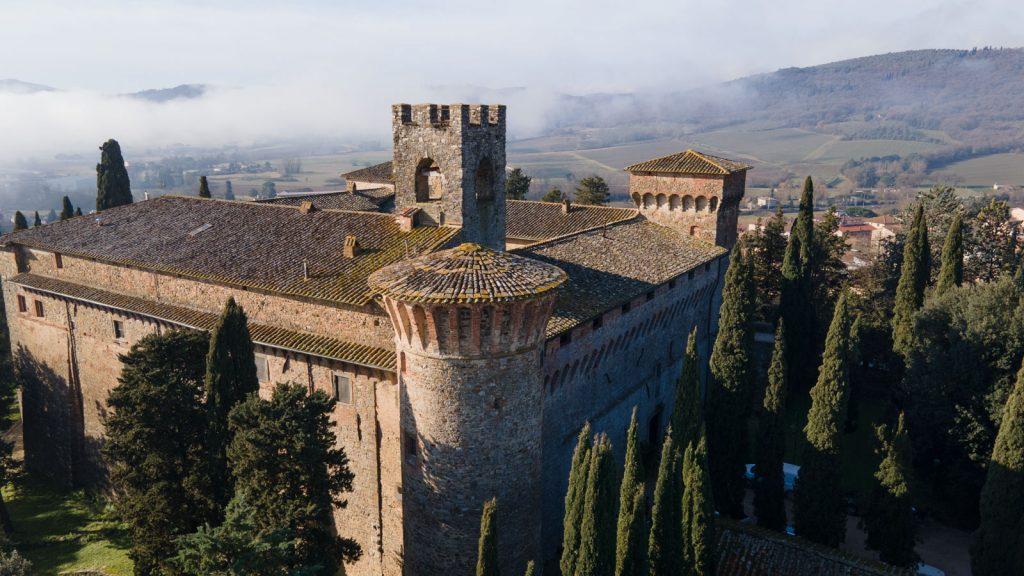
A place with 800 years of history
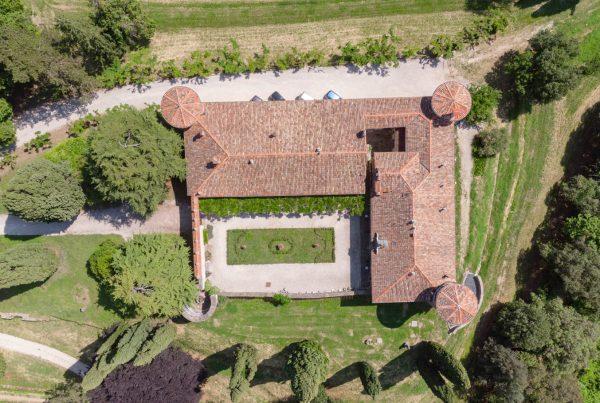
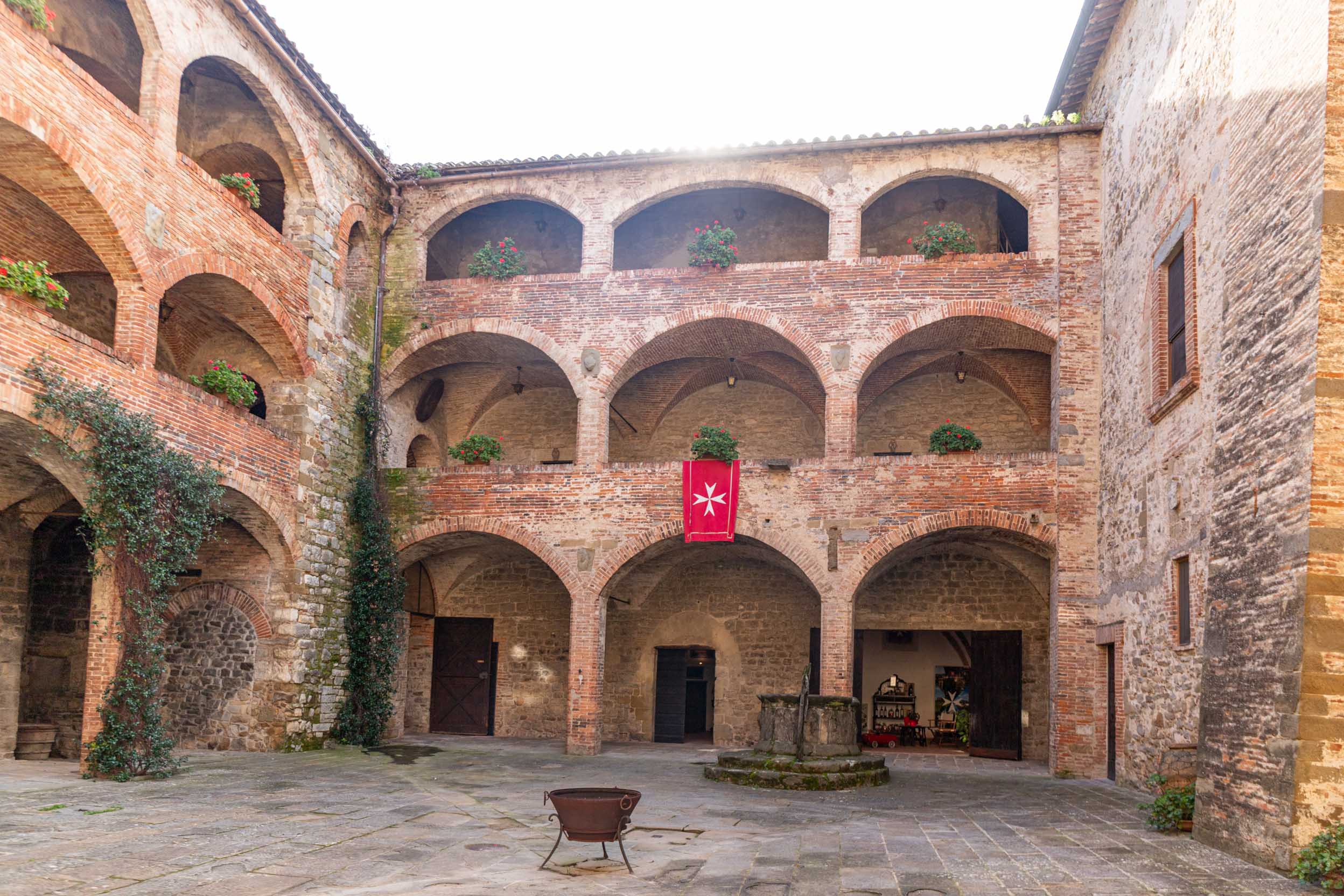
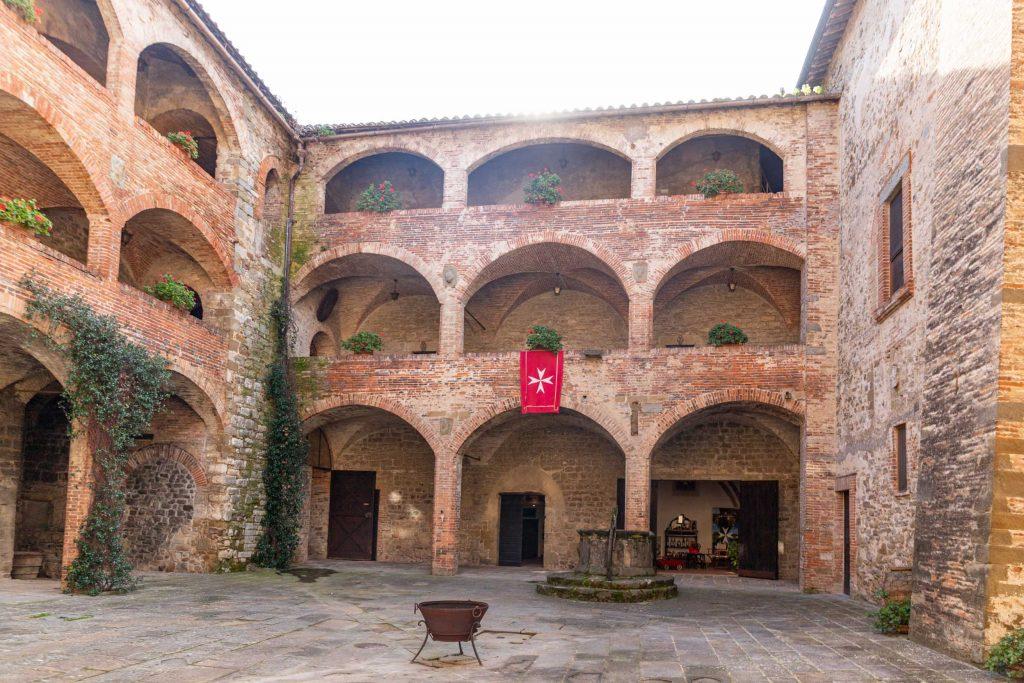
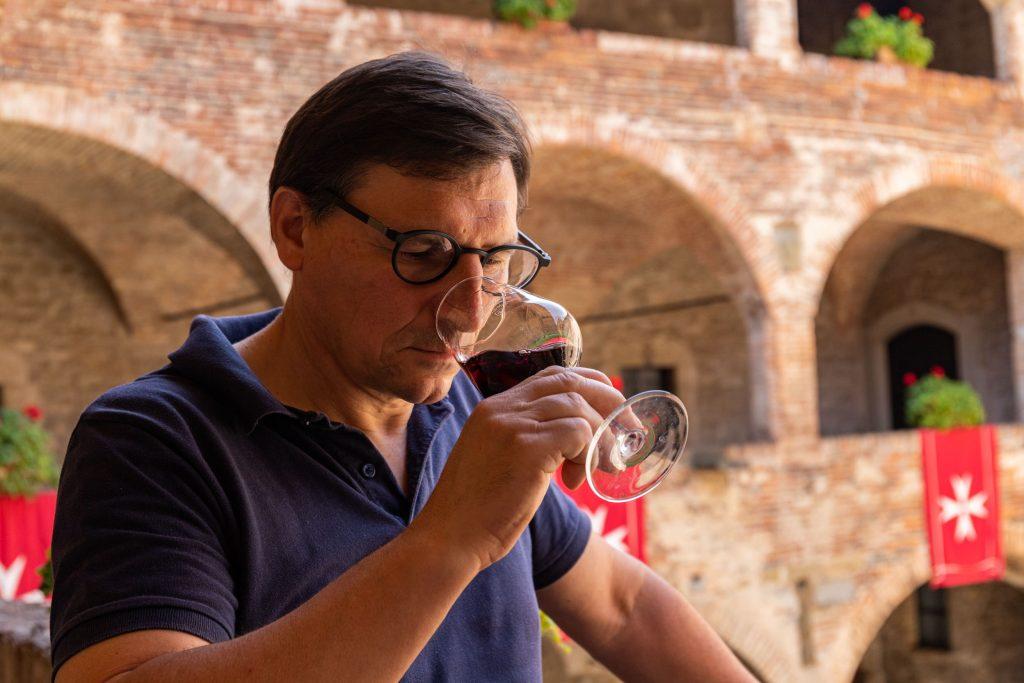
Castello di Magione is not a winery built to look like a castle. It is a real castle, erected in the 12th century as a hospice for pilgrims travelling to Rome and Jerusalem. It has belonged to the Sovereign Military Order of Malta for centuries, and today it is part of the Terre dei Cavalieri project. The walls, the cloister, the coat of arms carved in stone: everything you see is authentic. And this is where the wine is made.
The castle is located in Magione, in north-western Umbria, a few kilometres from Lake Trasimeno and half an hour from Perugia. It is easy to reach from both Rome and Florence, making it a practical stop for a weekend in the area.
What you’ll taste
The wines produced at Castello di Magione are all Umbria IGT. The range includes reds based on Sangiovese — the main grape variety of the area — and whites based on Grechetto, an indigenous Umbrian grape with a fresh, savoury profile. During the tasting you’ll try several labels, with an explanation of the territory, the grape varieties and the production method.
This is not a technical tasting reserved for experts. The experience is designed for everyone: those who already know a lot about wine will find precise information, while first-timers will understand without feeling out of place. The tone is the same as this article: straightforward, no frills, focused on what’s in the glass.
How the visit works
A visit to Castello di Magione includes a tour of the castle — the cloister, the historic rooms, the spaces where the connection with the Order of Malta is told — followed by a tasting in the cellar. It lasts roughly an hour to an hour and a half. Arriving a few minutes early is recommended.
The tasting is guided: someone explains what you’re drinking, where it comes from, how it’s made. It’s not a counter tasting where wine is poured and that’s it. It’s a structured experience, but without stiffness. Questions are welcome, and the answers are concrete.
Who is it for
The tasting works for couples, groups of friends, families with older children. It works for people passing through the area looking for something to do, for anyone planning a weekend in Umbria who wants an experience that’s different from the usual, for those who know Trasimeno wines and want to go deeper, and for those who don’t know them at all and want to start.
You don’t need to be a sommelier. You don’t need to know anything about wine. All you need is the curiosity to taste and the desire to see a place with eight centuries of history behind it.
How to book
Tastings are booked through the Terre dei Cavalieri website, in the experiences section. You choose the date, the number of participants and the type of visit. Confirmation arrives by email. If you need information before booking, you can write directly through the website.
The best times to visit are spring and autumn, when the landscape around Trasimeno is at its finest and the temperatures allow you to be outdoors comfortably. In summer the castle offers shade and cool air, but the days can be hot. During harvest, between September and October, the visit has an extra charm: you see the cellar in action, you smell the must, you understand what it means to make wine.
After the tasting
At the estate shop you can buy the wines you tasted during the visit, along with other products from the Terre dei Cavalieri project: DOP extra virgin olive oil, honey and ancient grain flours. If you prefer to buy later, at your own pace, everything is also available on the online shop.
Castello di Magione is one of the three visitable estates in the Terre dei Cavalieri project. The other two are Rocca Bernarda in Friuli and Villa Giustiniani in Veneto. Three regions, three territories, three different experiences. Those who visit one estate often discover the rest and decide to explore further.
800 years of history can’t be told in an article. They’re better told with a glass in hand, inside the castle walls.